Elastos Runtime v0.4.0 is now live.
Runtime is the local OS layer of ElastOS. It is where apps run as small sandboxed programs called capsules. Each capsule starts with no access to your files, wallet, network, or anything else on your machine. It only gets the permissions you grant.
v0.4.0 points toward the bigger ElastOS v2 direction: moving more dDRM, PC2, and platform logic into Rust and Runtime, so ElastOS can become fully native over time without depending on Puter as its base.
A Library for the Runtime desktop
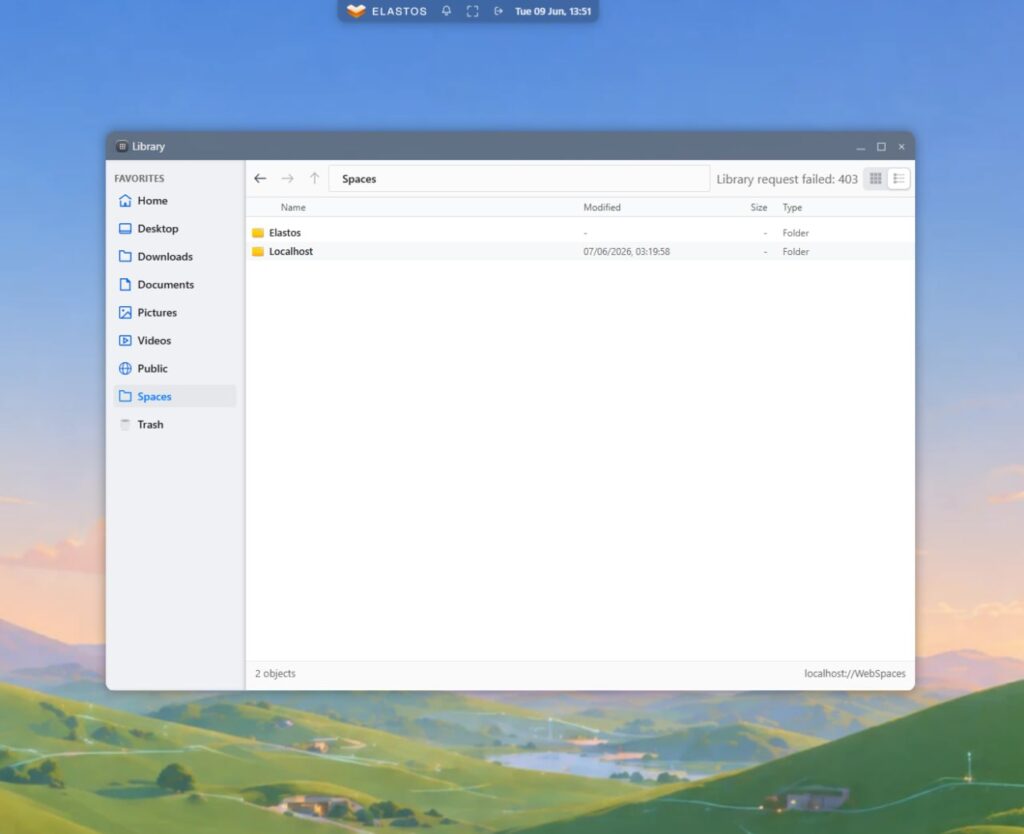
The main addition in v0.4.0 is the new Library release slice.
Library gives Runtime a more familiar desktop-style way to handle files, shared content, and objects. It adds navigation, upload and download, preview and open, publish, share, status, repair, Trash, Archive handoff, Spaces, context menus, and object events.
The important part is not only the interface. Files and shared content now sit behind one provider-backed object model instead of every app inventing its own path.
Home and Library now see the same objects
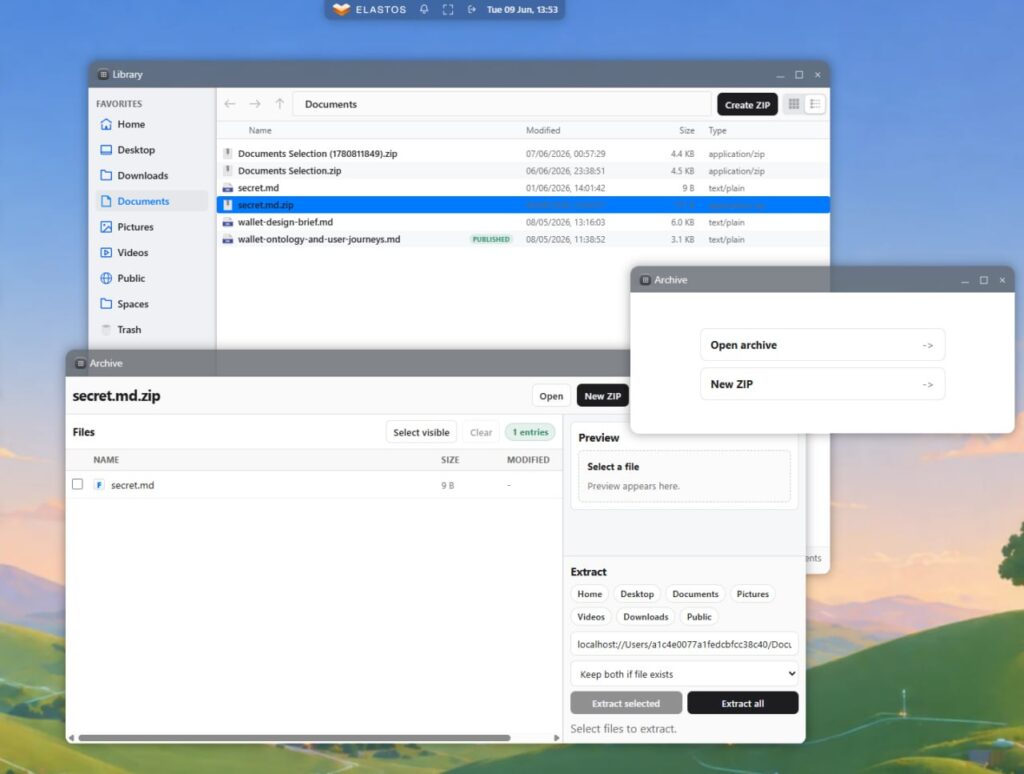
The desktop can now show provider-backed Library objects directly. What the user sees on the desktop and what the Runtime tracks underneath are moving into the same model.
That matters because the desktop should not be a separate visual layer disconnected from the system underneath. If a file, shared item, or object appears in Home, it should still be governed by the same Runtime contracts that decide who can open it, change it, share it, or repair it.
First-party apps are now Runtime capsules
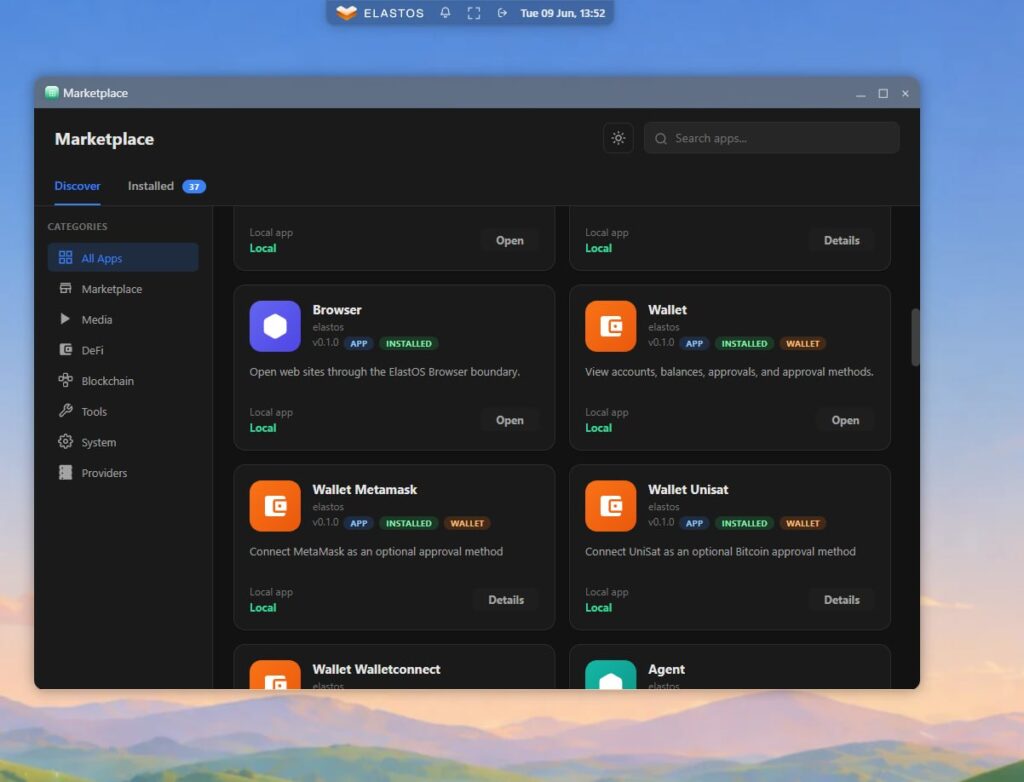
v0.4.0 also moves first-party browser-facing apps into proper WASM capsule packages.
Library, Archive, Marketplace, Spaces, Trash, and related shared-content flows are now moving behind capsule and provider contracts instead of exposing raw host paths or lower-level infrastructure details to apps.
The Marketplace capsule is especially important because it becomes the place where first-party apps can live as the catalog grows.
This is the same direction Runtime has been moving toward across recent releases: apps should be packaged, launched, and permissioned as capsules, not treated as loose web pages with broad access to the machine.
WebSpaces
WebSpaces also landed in early form.
The release adds a local mounted resolver view at localhost://WebSpaces/*, pointing toward content elsewhere on the network while keeping provider targets private to the resolver.
The idea is still early, but the direction is clear: content does not have to live only as a local file or a normal web link. Runtime can begin treating networked spaces as objects that can be mounted, opened, resolved, and governed through the same local authority model.
Provider contracts improved
Under the hood, v0.4.0 adds more of the provider-to-provider foundation.
That includes typed transfer receipts, stream sessions, content availability, repair flows, exact-CID fallback, quota surfaces, admission checks, and operator inspection views.
For normal users, the point is simple: Runtime is getting better at knowing what an object is, where it comes from, whether it is available, how it can be repaired, and which capsule is allowed to act on it.
What comes next
The next focus is getting Runtime running properly on Mac, so users can install and test in a normal desktop experience.
Carrier testing also continues across Elastos nodes, especially between Linux and Mac. The goal is to make sure node-to-node communication still works as intended across both environments, without breaking the private networking layer that ElastOS depends on.
AI features are also part of the next step. As Library, Marketplace, Spaces, WebSpaces, and capsule packaging mature, AI can begin using those surfaces in a controlled way, with actions routed through Runtime permissions instead of open access.
Closing
Runtime v0.4.0 is the Library, Marketplace, Archive, Spaces, Trash, and capsule-packaging release.
It moves ElastOS closer to a desktop where apps are capsules, files are governed objects, shared content has a clear path, and every action goes through the permissions model instead of open access.
It also points toward the bigger v2 direction: moving more dDRM, PC2, and platform patterns into Rust and Runtime, so ElastOS can become fully native over time without depending on Puter as its base.
Release notes: https://github.com/Elacity/elastos-runtime/releases/tag/v0.4.0