ElastOS V1 Live, WCI v1 Proposal Audit Passed, Keystone Fund Proposal Published, and Continued Development Toward v1.1
ElastOS V1 is Live
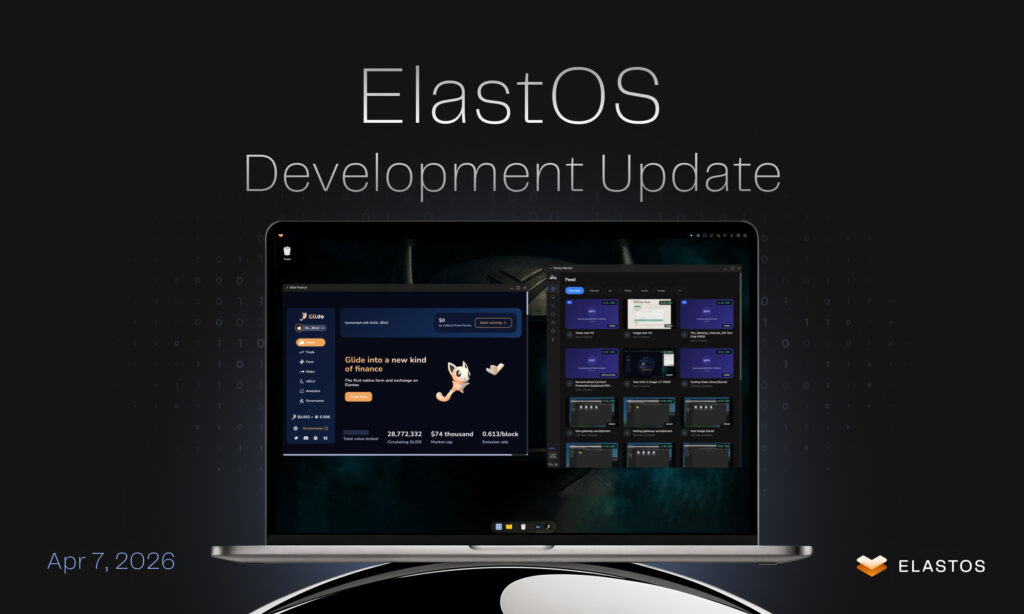
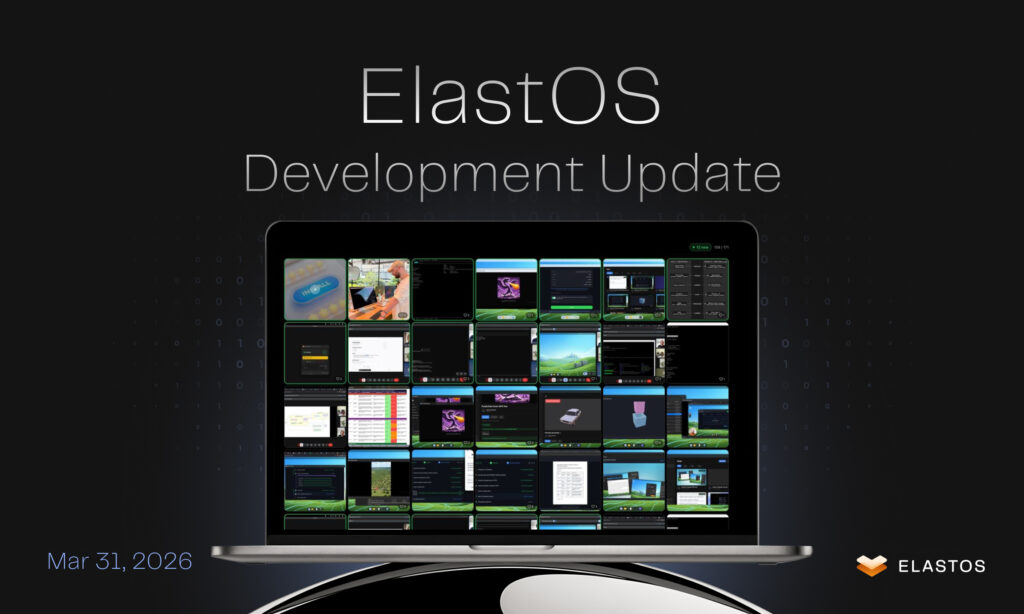
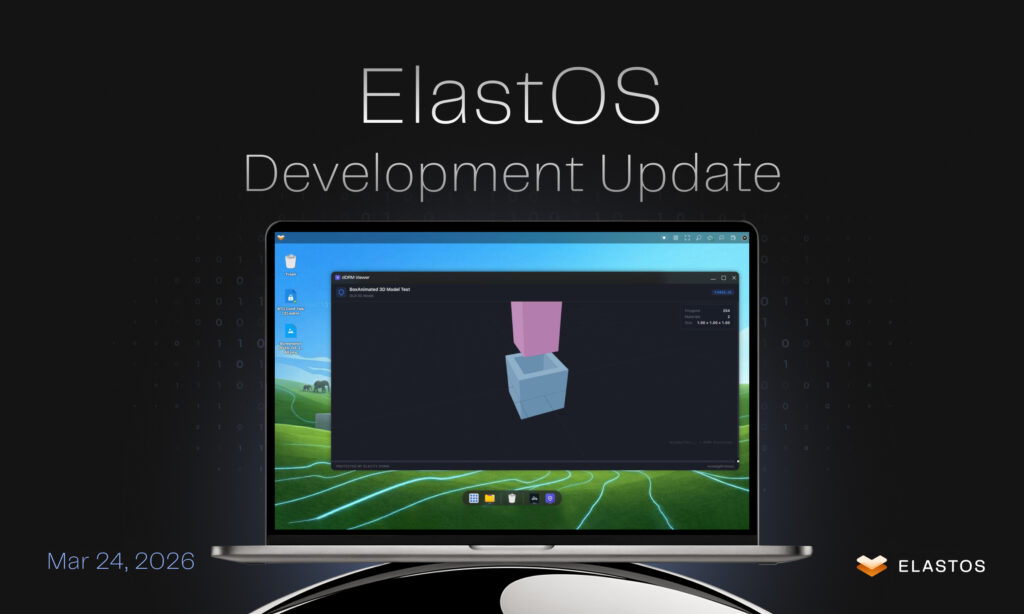
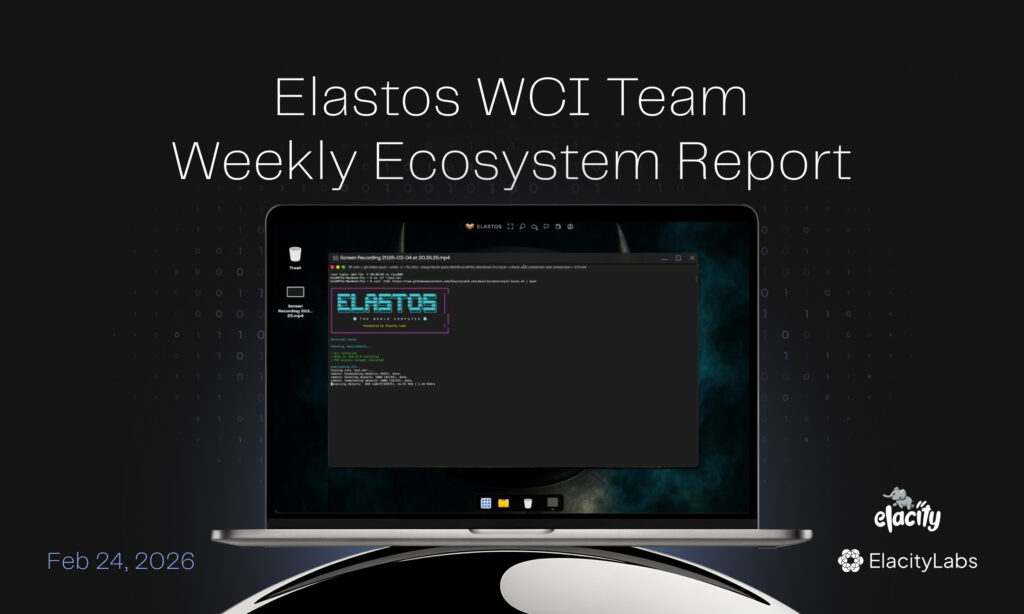
Earlier this month, Elastos announced the launch of the World Computer V1 alongside $3M in DAO-secured funding via Rong Chen’s Keystone Gift. For the first time in eight years, Elastos has a working core product – a sovereign personal cloud operating system built by Elacity Labs. ElastOS V1 represents 7,229 commits and 578,000+ lines of production code, delivering a full desktop environment, IPFS-backed personal storage, private AI with 5 providers, multi-chain wallets across 10+ chains, P2P networking with NAT traversal, WASM runtime, and one-command install across VPS, Mac, Jetson, and Raspberry Pi hardware.
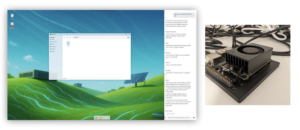
Community members are already purchasing NVIDIA Jetson hardware and deploying sovereign nodes independently — showcasing the original 2018 mission for the first time, with a real foundation to build on.
WCI v1 Proposal: Concluded and Audit Passed
The original World Computer Initiative (WCI v1) proposal, DAO Proposal #180, has now concluded. Elacity Labs has successfully passed its audit with the Elastos DAO Secretariat team, providing:

- A full public expenditure portal with all financial accounting transparent and verifiable
- Complete roadmap delivery across all committed goals — with many features shipped beyond the original scope, including Carrier networking, local AI, multi-chain wallets, and agentic infrastructure never included in the original brief
- 23 weekly ecosystem reports published throughout the mandate
- A value audit documenting $1.5M+ in traditional development value delivered for $150,000 — 10x capital efficiency, all verifiable on GitHub
Many DAO-funded teams in Elastos’ history have failed to deliver, pivoted without consent, or disappeared. Elacity Labs not only delivered the product promised to investors since 2017 for a fraction of a percent of what was raised, but set a standard for transparency and clear accounting. Every commit, every dollar, every report, verifiable and on the public record.
Keystone Fund Proposal Published
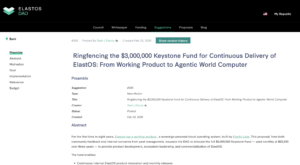
Building on ElastOS V1 and the successful WCI v1 audit, Elacity Labs has published a new proposal to the Elastos DAO: Ringfencing the $3,000,000 Keystone Fund for Continuous Delivery of ElastOS: From Working Product to Agentic World Computer.
The proposal requests $83,333/month over 3 years from the Keystone Fund to provide:
- Continuous ElastOS product innovation and monthly releases
- Supporting and working with third-party engineers under the same accountability structure
- High-profile networking and business development
- Social presence and community education
- Evolving ElastOS toward a fully Web3 Agentic OS
- Testing hardware and IoT device compatibility for peer-to-peer connectivity
- Architecting ELA value capture throughout the product’s critical coordination and resource layers
The proposal is currently in the suggestion stage for community discussion and feedback.
What’s Coming in v1.1
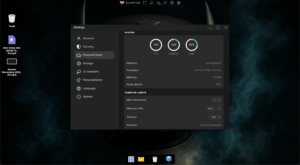
Despite WCI v1 proposal concluding, Elacity Labs has not stopped. The team is actively working toward the v1.1 release — 43 commits across 47 files, with 7,226 lines added since V1 — driven by real community testing on Jetson hardware and direct feedback from node operators. This represents a significant engineering effort across networking, storage, streaming, hardware support, infrastructure, and strategic documentation.
New Systems Built From Scratch
1) High-Speed Home Connectivity (WireGuard)
Built an entirely new system that lets home nodes feel as fast as professional cloud servers. When you access your ElastOS from outside your home network, it now connects through a high-speed encrypted tunnel instead of a slower relay. If the fast connection drops, it automatically falls back to the relay — and keeps trying to reconnect in the background. None of this existed before.
Why it matters: if accessing your personal cloud from your phone feels slow, nobody will use it. This makes it fast.
2) Automatic Hardware Detection
ElastOS now detects what hardware it’s running on at startup — Jetson, Raspberry Pi, Mac, cloud server — and automatically adjusts its settings for the best performance. No manual configuration needed.
Why it matters: ElastOS should work well on a $99 Raspberry Pi and a $5,000 server alike, without the user having to know the difference.
3) System Health API
A new internal dashboard showing hardware status, storage health, GPU availability, and network state. Provides the foundation for monitoring nodes remotely.
Major Overhauls
4) Relay Protocol (complete rewrite)
The Boson Active Proxy — the system that makes home nodes reachable from anywhere without opening router ports — was completely rewritten from the ground up. The original protocol had encryption mismatches and packet format errors that caused intermittent failures. 11 consecutive debugging sessions traced and fixed every issue.
Why it matters: this is the safety net. When the fast tunnel isn’t available, the relay ensures your node is always reachable.
5) Connection Manager (major upgrade)
The service that decides how your node connects to the outside world was expanded from a simple health checker to a full traffic orchestrator. It now picks the fastest available route, automatically recovers from failures, and reconnects without manual intervention.
Why it matters: at scale, nobody can manually fix connection issues for thousands of nodes. This has to be self-healing.
6) Supernode Gateway (major upgrade)
The gateway that routes traffic to all *.ela.city domains now detects and recovers from broken connections automatically. After a node reboots, the gateway clears stale connections within 60 seconds — no manual restart required.
Why it matters: the gateway is the front door for every personal domain. If it breaks, every node goes offline. Self-healing here is essential for decentralization.
7) Video & Media Streaming (rewrite)
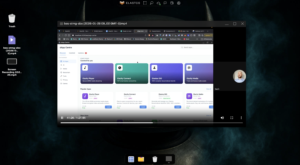
Completely rebuilt how ElastOS serves video and large files from IPFS. You can now seek to any point in a video instantly, stream multi-gigabyte files without loading them into memory, and play media directly from your personal cloud.
Why it matters: streaming your own media from your own node is the foundation for the dDRM content marketplace — where you truly own what you buy.
8) IPFS Storage Improvements
Your node no longer broadcasts your files to the global IPFS network. Private files stay private. Connection limits prevent your home internet from being overwhelmed. Large file uploads now show progress and handle timeouts gracefully.
9) One-Command Installer (rewrite)
Completely rewrote the installation script. One command now installs everything — including high-speed networking, auto-start on boot, and hardware-specific optimizations. A community member can go from zero to a running sovereign node in under 15 minutes.
Bug Fixes & Polish
- Video seeking — scrub to any point in a video, works on files of any size
- Large uploads — multi-gigabyte files no longer crash on devices with limited RAM
- PDFs & images — fixed blank pages and broken images caused by a data encoding bug
- MKV files — now open in the player on double-click (was requiring drag-and-drop)
- AV1 video in Firefox — clear error message instead of a silent black screen when the format isn’t supported
- File creation — error dialog when creating new files fixed
- Video compression — fixed a conflict between video seeking and gateway compression
Privacy Protection
- Your personal files are now invisible to the IPFS network — private at every layer, not just the login screen
- Connection limits prevent your home internet from being overwhelmed
- Architecture ready for the dDRM marketplace: when you sell content, only encrypted versions are shared publicly. Your personal library stays yours.
Strategic Documentation
- Architecture Convergence Guide — how today’s ElastOS evolves into tomorrow’s modular capsule runtime, aligned with Rong Chen and Anders Alm’s vision
- Network Hardening Roadmap — every weak point identified during testing, with a plan for self-healing at every scale (50 nodes to 100,000+)
- Strategic Roadmap — all 13 DAO proposal milestones broken into concrete tasks with monthly release targets
Community Testing
Community member EverlastingOS has been actively testing on NVIDIA Jetson Orin Nano hardware, providing real-world feedback that directly drives development:
- Confirmed PDF, image, and video streaming fixes working
- Identified the bandwidth issue that led to the IPFS privacy fix
- Testing large file uploads (2GB+ confirmed working, optimizing for larger files)
- Verified auto-start on boot works after reboot
- Suggested selective file sharing permissions — validating the access control model planned for the capsule architecture
This is exactly the development loop the Keystone Fund proposal is designed to sustain: community feedback → same-week fixes → continuous improvement → monthly releases.
Try ElastOS Today
- Desktop Launcher (Mac): Download ElastOS
- Terminal Install: curl -fsSL https://raw.githubusercontent.com/Elacity/pc2.net/main/scripts/start-local.sh | bash
- Documentation: docs.ela.city
- GitHub: github.com/Elacity/pc2.net
What’s Next
- Merge the v1.1 branch to production after community testing passes clean
- First monthly release under the new cadence
- Begin Elacity dDRM SDK integration (Phase 1 roadmap item)
- Continue supernode hardening and expansion
- Weekly shipping reports begin with the Keystone Fund mandate
The Keystone Fund proposal is live for community discussion: Read the full proposal